Foodbuzz 24, 24, 24: Zingerman’s Guide to Good Eating

Zingerman's Roadshow

“I’m craving American food!” said no one, ever.

I’ve lived in the US my entire life and never have I heard anyone exclaim such a thing. But now that I’ve eaten at Zingerman’s Roadhouse—an Ann Arbor, Michigan restaurant that celebrates the culinary traditions and artisan food makers of the United States–I’ll be saying that phrase a lot. Zingerman’s Roadhouse makes me proud to be an American and hungry for its regional specialties.

Where else can a discerning food lover enjoy tasty buttermilk fried chicken, savory Southern Carolina BBQ, sweet Hawaiian Pineapple Chicken Salad, meaty Maryland crab cakes and earthy-sweet Pennsylvania Dutch Creamed corn in one glorious location?

One trip to the Roadhouse and you’ll save yourself a three thousand mile cross-country culinary tour. The masterminds behind Zingerman’s Roadhouse studied the nation’s gastronomic traditions with the care of scholars and created a menu that celebrates the nation’s best dishes all in one central locale.


Zingerman’s puts Ann Arbor on the culinary map

Zingerman’s may have started in 1982 as solitary delicatessen dedicated to serving great sandwiches, but it has since grown to include six other establishments that consist of a bakehouse, creamery, training branch, culinary press, and an impressive mail-order artisan food company. The Roadhouse—the seventh establishment in the Zingerman’s Community of Businesses—is a tour de force where elements from all of the culinary outposts can come together.

Welcome to the Roadhouse


Enter the Roadhouse and Zingerman’s friendly staff is always happy to help. Past the blur of the busy open kitchen, beyond the colorful signage announcing daily specials and the glass cases filled with vintage salt and pepper shakers, you’ll find diners tucked away in backroom booths, bellied up to the bar or lounging outside at tables adjacent to the barbecue pit.

My husband and I sat at the bar so that we could study the names of the Michigan-local brew taps. We were impressed by the extensive selection of rare Bourbons, jars of house made maraschino cherries and containers filled with freshly squeezed juices. Unlike many restaurants across our fair country, no mixers are used and only fresh ingredients are stocked behind the bar.

Our barkeep, Adam, greeted us with an uncommon enthusiasm and excited menu descriptions that had us wishing we could order everything. Adam told us how Roadhouse Chef/Partner, Alex Young had such a commitment to fresh ingredients he started a three-acre organic farm to supply the restaurant with all its seasonal produce. Located in Dexter, Michigan, the Roadhouse’s dedicated farm produces lettuces, radishes, scapes, morels, asparagus, and almost thirty different heirloom varieties of tomatoes for the restaurant. Roadhouse food wastes are composted and trucked to the farm to improve the health of the earth.

While still mulling over the menu choices, Adam presented my husband and I with a sample of the Roadhouse’s famous barbeque. On the plate were mouthfuls of pulled pork topped with three different sauces: earthy, eastern North Carolina vinegar, sweet Memphis tomato, and spicy South Carolina mustard. Adam explained how Ed Mitchell, a North Carolina native and pit master, moved to Michigan to teach the Zingerman’s crew how to smoke free-range, heirloom-breed hogs over oak for over fourteen hours and prepare the meat southern-style.

To drink, we ordered the Jolly Pumpkin “La Roja, a sour amber craft beer that gets its tart, food friendly acidity from naturally occurring yeasts found in the brewery. Within seconds of sampling the beer, a smiling server named Brian dashed over to enthusiastically approve of our beer choice.

“Cool!” the young man with the long side burns exclaimed with unsolicited enthusiasm. “You guys picked the best beer we have!”


We paired our sour beer with Zingerman’s Chesapeake Bay Crab Cakes ($12.50). More Maryland jumbo lump blue crab meat than anything else, the cake’s sweet flavor was enhanced by a dollop of Zingerman’s ultimate tartar sauce*.

While waiting for our next course, the bartender poured us a sample of Zaison, a Belgian styled beer Jason Spaulding, the Roadhouse’s bar manager (and former New Holland Brewery’s brewmaster), created for the restaurant. As we enjoyed the beer’s zesty flavors and light style we had the good fortune of meeting Jason, and happily listened as he explained how he came to make the food-centric, single-batch brew with orange peel and black pepper.

If it isn’t clear yet that the Roadhouse isn’t your typical restaurant, it’s time to point out an important aspect that many people don’t realize is a key to Zingerman’s success: an unrivaled commitment to service. From the minute you walk through the door, every employee goes out of their way to make sure that they can help give you the best possible experience. Want to have creamed corn instead of coleslaw on your entrée? Sure. Want a behind-the-scenes look at what’s going on inside Zingerman’s Roadshow (a free standing take out “trailer” designed for speedy breakfast, lunch and dinner to-go orders)? Come on inside! At Zingerman’s, “no” is not in the employee’s vocabulary.

In preparation for the arrival of our entrees, we ordered the Dragon’s Milk Beer. This gloriously dark and hoppy beer from Michigan, gets its vanilla and mocha flavors from being aged in bourbon barrels.

The beer paired perfectly with the sweet, Niman Ranch pork ribs ($19 for a half rack). Cooked for nine hours in Alex’s Red Rage Tomato BBQ sauce, the ribs were served on—thanks to Zingerman’s yes-we-can attitude–a generous portion of South Carolina corn grits and mustard coleslaw. The sweet and meaty ribs were fall-off-the-bone tender and chewy from the long, slow cook. The grainy texture of the grits and the sweet crunch of the coleslaw made the title “side dish” seem like an insult—these were must-have bites that required our full attention.

We enjoyed the Southern Carolina mustard BBQ pork entrée ($11.50) with Pennsylvania Dutch Creamed Corn and Southern-style braised collard greens. The mustard vinegar sauce (a favorite in western South Carolina) enhanced the moist and flavorful pork without overpowering the meat’s natural flavors. The earthy sweetness and playful texture of the creamed corn played perfectly against the tart collard greens.

Had we more room for food, we would have ordered the Buttermilk-fried free range chicken with mashed potatoes, gravy and coleslaw. But we had enjoyed that dish and many others on a previous visit, and thought better to save room for dessert.

Thank god we did, because the Roadhouse brownie sundae is not to be missed. Zingerman’s bakehouse brownies are crave-worthy on their own. But served warm, with the Creamery’s fresh vanilla ice cream, a perfect amount of hot fudge and a house-made maraschino cherry—we were in heaven.

As a fan of one of America’s greatest liquors—Bourbon—I decided to try a Roadhouse specialty cocktail. . A perfect American cocktail to end a perfectly American meal, the Kentucky Bed Warmer is made with Knob Creek and Blenheim ginger ale. It’s a delightful tippler that aids digestion and makes you smile.

It’s only been a day since I visited the Roadhouse, but I can already feel a new kind of craving coming on. I turn to my husband with a smile.

“Hey honey, guess what I’m craving…”

Kentucky Bed Warmer
From Zingerman’s Roadhouse

2 ounces Knob Creek
1 ounce Orange Curacao
2 dashes Orange bitters
Blenheim ginger ale
Orange zest

Add Knob Creek, Orange Curacao and bitters to a Boston shaker filled with ice. Stir until chilled. Add to bucket glass and fill with Blenheim ginger ale. Top with orange zest and serve.

*Zingerman’s Tartar Sauce is a delicious blend of mayo, Dijon mustard, minced cornichon, minced red onion, diced plum tomatoes, Quebec cider vinegar and sugar. Try making your own version at home!

NOTE: Thank you so much to the generous people at FoodBuzz.com for their support of this blog and helping fund this food adventure.

The Rosetta Shallot

Shallot, Chez Panisse style

Sometimes it’s the smallest lessons that have the power to change every aspect of the way you think. Some people call that life changing moment a “shift”. Oprah branded the concept and named it the “Aha” moment.

If I were an influential branding agent, I think I would find a word to signify the transitional moment in the kitchen when cooking is forever changed by a single lesson. Maybe I’d call it “the cast iron moment”, or maybe I’d go with something quite simple, like “shallots.”

My culinary brain was irrevocably rewired the day I understood shallots. Not long ago, while dining for the first time at the Chez Panisse Café, I found myself marveling at the tiny outbursts of sweet and crunchy acidity hidden between leafy mixed greens. I pulled the plate closer to discover the delicious source of the complex flavors. My charming waiter, Daniel, stepped up to the table as I inspected the perfect, tiny cubes of purple and white hiding underneath the wild arugula on my plate.

“What is that amazing flavor?” I asked him with awe. “Onion?”

Daniel smiled politely. Without a bit of judgment he blew my mind with these three words: “They are shallots.” Well drop a pin in my map of culinary time and mark it “shallots”. My salads and mignonettes have never been the same since.

Pre-Shallots (PS)

Before I truly understood the subtle power of the shallot (the 12th century crusaders called the shallot “valuable treasure”), I mistakenly thought them to be a smaller, more expensive version of the onion. Though shallots may have a similar structure to onions —concentric rings and a papery skin—they are a different species altogether.

Rosetta shallot

Now that comprehend the role shallots play in simple salads and gorgeous mignonettes, I can, so to speak, understand their language. Now whenever I go to the farmers’ market, I’m sure to pick up a couple of tight, heavy shallots (I prefer the smaller ones for their mild flavor and sweetness) for my week’s menu.

At home, I transform the shallots into a pile of tiny, mignonette squares, drizzle them with red wine vinegar, cover the stuff, and leave the precious mix in the refrigerator. Having this shallot mise-en-place on hand saves time and creates the most incredible salads in just seconds.

Shallot, Chez Panisse style

Shallots can be found year round, but the prime time for them is from April through August. When choosing shallots, look for firm ones that are heavy for their size. Avoid shallots with soft spots or are sprouting.

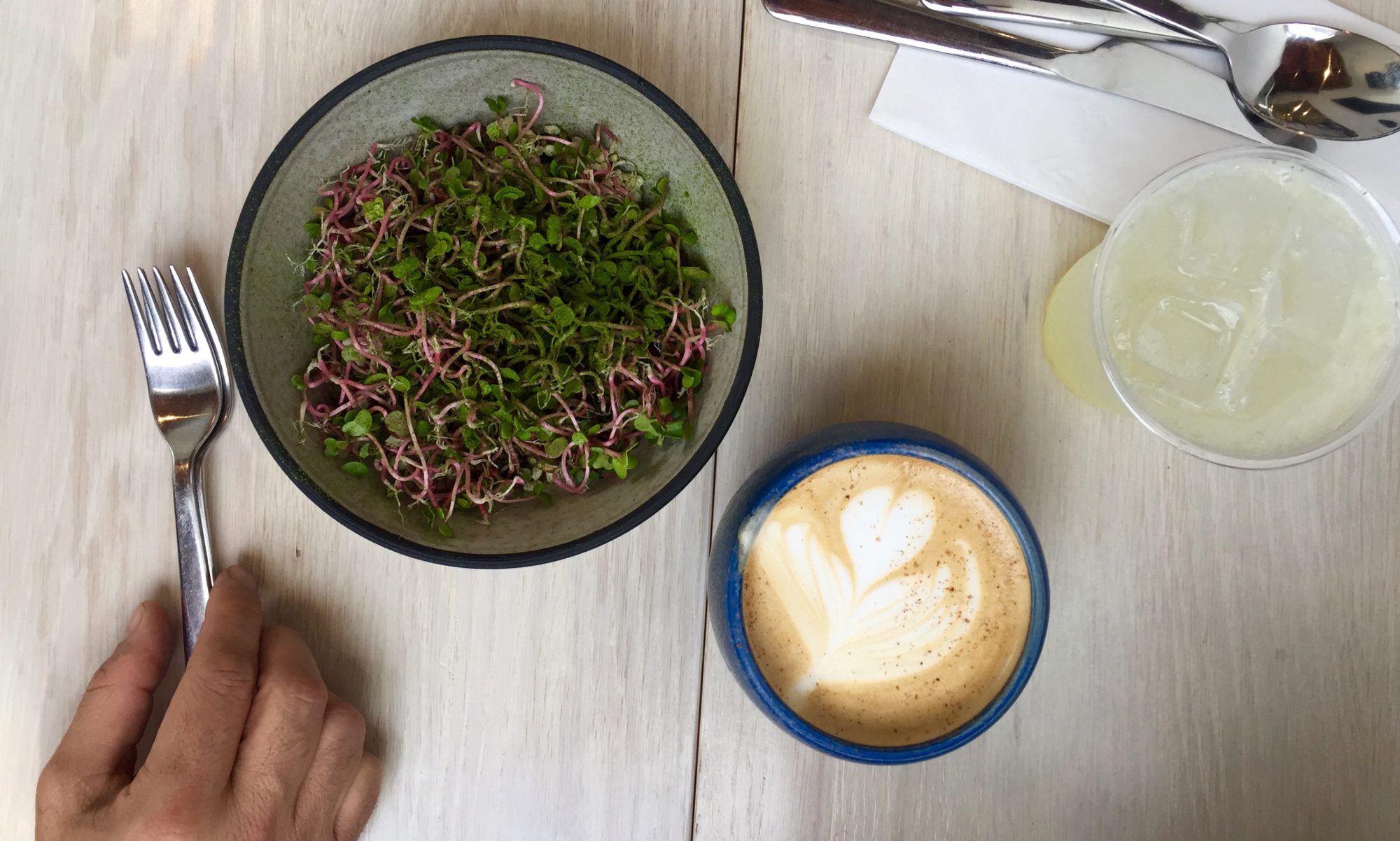
Radish salad with shallots, Chez Panisse style

[print_link]Simple Salad with Shallot Vinaigrette
One of the best parts about learning basic technique, is that you don’t need to have recipes. Salad making is one of the best places to learn how to create by feel and with your taste buds. Allow this to be a simple guide.

Two big handfuls of greens (washed and dried)
2-3 fresh radish (or another lovely market vegetable), thinly sliced
great olive oil like Oleificio Chianti extra virgin olive oil (Alice Water’s olive oil of choice)
Salt
Pepper
1 shallot, cubed uniformly
good red wine vinegar

Toss the cubed shallot into a small bowl and drizzle with red wine vinegar. Let sit for at least 15-20 minutes. Fill a salad bowl with enough mixed greens for the number of people you are serving. Season with salt and pepper. Drizzle lightly with olive oil. Gently toss with clean hands. Take a generous pinch of the wine soaked shallots and add to salad. Toss and taste for balance. Drizzle more vinegar if needed. Add some of the sliced radish and toss again. Taste and then plate the salad onto cold plates. Add the final amounts of radish to the plate for color and serve.

Home Bartending 101


I will always be grateful for the skills I’ve picked up while working in restaurants. Being able to clear multiple plates from a table is a great trick. The ability to recall the flavor profile of a wine upon mere mention helps out at the wine store. But one of my favorite acquired talents is my drink making ability.

If you’ve ever had a delicious crafted cocktail, the balance of flavors prove there is much more going on in the glass than just alcohol and mixers. Like cooking a great meal, cocktail making require understanding philosophies of flavor and real technique in order to elevate the drink to its “awesome cocktail” status.

Ask any bartender and they’ll tell you that the first lesson in drink making is that even though some guests will suffer through a slightly flawed appetizer, most won’t stand for such failings when it comes to a $14 cocktail. If a drink is too sweet or too sour it will get sent back. On a busy night at the restaurant, the last thing your bartender wants to do is remake another cocktail. Make enough hand muddled mint and lime mojitos (I’d guess I’ve made about a million) and you soon learn how to make a pefectly balanced drink. Every time.

Though the average person has no interest in working in restaurants, most would really like to be able to create a great tasting cocktail. Here are a few pointers that can help you make great cocktails at home.


Think like a chef

–Understand the balance of flavors. Acidic, sweet and savory components must work together to create a perfect union of flavor. Sweet, spicy and savory ingredients should complement spirits—not overpower them. Constantly taste for balance of flavors.

–Use the best ingredients. A drink can only taste as good as the ingredients used. Use fresh fruit and vegetables for cocktails. Make everything from scratch. Never use pre-made mixes.

–Learn classic techniques. Know traditional cocktails before experimenting with new ideas.


Have the right tools

Chefs need a handful of kitchen essentials to do their job. So do bartenders. Regardless of your desire to make a good drink, you never will be able to do it well until you have a solid bar kit. Stay away from the pre-packaged kits from big name stores and go to a restaurant supply place.

These three items are essential for any home bar. You will need:
–A Boston Shaker—the pint glass and a metal shaker combo used by most bartenders
–a wood muddler
–a handheld juicer. Cut a lemon or lime in half, pop it into the metal squeezer and bam! You’ve got juice! A handheld citrus squeezer like this is great for quickly adding citrus to whatever you’re making. I prefer the larger metal kind that can easily be found in the bartending section of most restaurant supply stores.

buy some booze
One bottle of vodka, rum and bourbon is a good start. Buy a secondary “seasoning” liquor that you can use for flavoring cocktails: think Sweet or Dry Vermouth, an Italian digestivo, or a fruit or nut flavored liquor (Grand Marnier, Amaretto, etc.).

Make a batch of simple syrup
Making cocktails at home is so much easier when you have a jar of simple syrup on hand. Cook up a good sized batch, put in a covered glass container and it will keep in the refrigerator for weeks. If you don’t mind adding a golden hue to your drinks, I suggest trying brown sugar to make your simple syrup. I like the rounder flavor it gives my drinks.

[print_link]

Recipe for Simple Syrup
A fundamental ingredient for bartending is this incredibly simple syrup.

One part sugar
Two parts water

Bring water to a boil and add sugar. Reduce heat and cook down until the liquid begins to look syrupy. Adding spice and herbs to the simple syrup as it cooks down is a great (and easy) way to impart flavors to a drink.

Farmers Market Cocktail Recipe


I’m one of those people that go to the farmers’ market with nothing more than a handful of dollars and a culinary mind that’s ready for inspiration. A vegetable’s texture and bright color sets my mind racing. A ripe piece of fruit entices me with its soft skin and mouth-filling juices. Sweet or savory, I’m always amazed at what the market inspires in my kitchen.

This week at the market was all about the fruit. I filled my bags with cherries, juicy stone fruits and bright citrus. But it was boysenberries–glistening gems from Jimenez Farms’–that inspired my imagination.

Not up for baking or jelly making, I set out to create a cocktail that celebrated the fruit’s delicate nature and its robust flavors. It took me a couple of tries, but I finally found the perfect ingredients to celebrate the fruit’s sweetness and savory flavors. After the last sip of juice I was fishing around the bottom of the glass for every delicious morsel of fruit.

[print_link]

The Gemmy

½ tangerine (or sweet citrus), juiced
½ lemon, juiced
5 boysenberries
1 oz simple syrup
2 oz spiced rum (I prefer Barbancourt)
2 branches of thyme

In a cocktail mixer, muddle boysenberries and the leaves from one branch of thyme. Juice half a lemon and tangerine into the glass. Add the simple syrup and rum and then fill the glass with ice. Shake well and serve immediately. Garnish with the remaining branch of thyme.

Food Woolf on Edible Los Angeles’ Blog


The day I met Nathan Dadouk, the artisan baker of Tavern Restaurant, I was blown away. Beyond the immediate flavors of his rustic breads, I was moved by his passion for the ancient art of bread making. I found myself fighting back tears as he told the story of how, at the tender age of eleven, he came to learn the art of bread making from a monk and master baker while attending a boarding school in Venezuela.

Nathan’s passion for dough and his study of bread making made such a compelling story, I found myself gushing to LA friends about my new favorite food artisan. Had they ever heard of Nathan? Had they visited Tavern for dinner or gone to the Larder to order a loaf (or ten) of bread? Eventually, I realized, it was time for me to stop gushing, collect my thoughts and write a story about Nathan.

But first, research!

I took a loaf of Nathan’s multigrain bread home with me to experiment with. In just one week, his whole grain boule inspired thick pieces of toast with butter and jelly for breakfast, open-faced burgers for lunch, and marinated mussels in olive oil and vinegar for maximum bread dipp-age. Nathan’s passion for the look of the bread’s interior, the feel of the crust and the acidity level of the dough will most certainly inspire many more meals.

Several loaves of bread later, I had the incredible good fortune to meet the super-talented Lucy Lean, Edible Los Angeles‘ new editor (thanks T&D!). As a huge fan of the Edible publications, I was thrilled to meet Lucy.

Like Nathan, Lucy is a true artist and visionary. Since joining the magazine she has worked incredibly hard to update the look and feel of Edible LA. The spectacular results can be seen both on the quarterly’s pages and on the magazine’s website (which includes an amazing video of Chef Michael Cimarusti made by my friends White on Rice!)

Within minutes of meeting, I couldn’t help but gush about Nathan to Lucy. Luckily, Lucy loved the story and asked me to write about Nathan for Edible’s new blog which features posts from noted bloggers (like Spicy Salty Sweet, White on Rice and…me!)

Please swing by the website to read honest stories about our region’s culinary culture, chefs, local farmers and the food artisans that make eating in southern California so amazing. And if you have the chance, check out my profile of Nathan.

Want a copy of the summer issue of Edible LA? Pick up a copy at Whole Foods, your local farmers’ market or any of these locations!

Food Blogging News Weekly Round Up: June 5

Good Milk
Some uplifting news from the dairy world. At Straus family farms, things are actually looking up and sales are slowly increasing. Ethicurean writes about the struggles facing dairy farmers and how one farm is fighting to maintain their market share.

So you think you wanna be a chef
Thanks to slick magazines and popular reality TV, it’s finally cool to be a chef. But what it takes to become one isn’t easy. Long hours, brutal conditions and low pay are ego crushing aspects of the job that most culinary students don’t fully appreciate until they’re facing the hot flames of a kitchen after seven eighteen hour days in a row.

Before you fork over the big bucks to go to culinary school, check out Shuna Fish Lydon’s delicious blog, Egg Beater. Lydon is a pastry chef that not only works in the business but she also writes about her life in the kitchen. In a recent post, she suggests that if you want to be a chef, start saving your pennies and turn off the reality TV cooking show. “This industry isn’t for the faint of heart. It’s for the passionate, the crazy, the driven, the competitive.”

Food-oirs
Thanks to Anthony Bourdain’s flawless food memoir, Kitchen Confidential, lots of people think they can write about their life in food. The New York Times reviews three new food memoirs on the stands.

Speaking of Bourdain…
Here is his GQ top ten list of places to eat before you die via Russ & Daughters website (my favorite smoked fish and bagel shop in the Lower East Side).

Back in the Good ‘Ol Days
Back in the depression the US Government gave out of work writers stipends to spread out across the country and write about the diversity of food in our fifty states. The collection of WPA writings were never published (thanks WW2), but are finally being released this month. Mark Kurlansky edited the collection: THE FOOD OF A YOUNGER LAND

The Service Problem…
Comments on service from two people that eat out a lot. Though the Zagats may be difficult people to wait on (true story), they offer this feedback on how restaurants can be better about giving great service.

Blog Shilling
Food Blogger, Chez Pim, endorses a yogurt brand and promises the NY Times that her ethics are intact. “It’s been important to me that I keep my ethics and I don’t shill.” She says that she would only agree to endorse a product (for what amount of money she will not disclose) that she believes in.

Bourdain’s List

How to help your local dairy farmer


There’s a crisis happening in the food world and few have any idea that one of our country’s most beloved food industries is on the verge of collapse.

Your local dairy farmer is on the brink of disaster.

Milk does a body good, but not the dairy farmer

As things stand, current milk prices equal half of what it takes for dairy farmers to feed and milk their cows. If milk prices don’t stabilize soon, independent dairy farmers across our country will fold. Some warn that beyond the loss of local dairy farms, many of these farmers are losing the will to go on.

In just six months, two dairy farmers have committed suicide.

Thanks to the recent recession and pressure from large dairy corporations like Hood and Horizon, individual farmers are struggling to keep from losing everything. Every carton of milk sold at the grocery store represents a loss of funds at a local dairy farm.

According to Amanda St. Pierre of Dairy Farmers Working Together, many farmers are so depressed by their increasing debts they refuse to put time towards bringing public awareness to their cause–for fear of missing valuable hours of work.

A lose/lose situation

According to a recent Los Angeles Times story, California dairy farmers have been hit especially hard. As the number one dairy state, California farms produce one-fifth of the nation’s supply of milk—that’s $7 billion worth of milk annually. LA Times writer, Jerry Hirsch reports that farmers are staying afloat by getting loans on their property and selling off their cows for slaughter. If milk prices don’t go up soon, he wrote, farmers will spend the loaned funds in short time and quickly go out of business.

As an increasing number of dairy farms face bankruptcy, the future for our nation’s milk farmers looks increasingly dim. Even the organic dairy farmers—once the most profitable sector of the dairy business—have seen any profit disappear as health-conscientious customers skip the higher-priced organic milk for lower priced options from large conglomerations. Now, many farmers are wishing they hadn’t made the investment to go organic.

Respect the Cow

After seventeen years as a beans and rice vegetarian—I avoided meat and poultry for political and ethical reasons–I started eating red meat after becoming increasingly desperate for a change of diet and a source of real iron. I forsook food politics for the health benefits of–and pure enjoyment from–unabashed eating. A thorough read of Michael Pollan’s Omnivore’s Dilemma changed all that, however, as his words reminded me of the need for political and ethical eating–even as an omnivore.

I quickly adapted my post-Pollan diet to create ways for my buying dollars to show respect for the animals’ lives, the planet’s needs, the farmers’ work and the talents of dedicated artisans–while still enjoying my foodie cravings.

When I read this week’s shocking story in the LA Times about California dairy farmers, I began wondering what I could do as a consumer to help put a stop to this mounting crisis.

HOW CAN WE HELP?

Request local dairy farmers’ participation at your local farmers’ market: According to a recent New York Times article, some New England farmers are considering selling their milk directly to the public. Research dairy farms in your area and ask the farmers to participate in your local farmers’ market.

Local dairy farmers could take advantage of the recent popularity of local farmers’ and begin to offer their products directly to the consumer. With this sort of presence, consumers will have access to information about where their milk comes from, how the cows are raised, and will have a direct relationship with the farmer that will result in dedicated buying dollars. In addition, the Vermont House of Representatives recently passed a bill month to increase the amount of raw milk a farmer can at farmers’ markets.

When possible, pay extra to buy local.

Boycott bad brands
According to the Organic Consumers Association, brands like Horizon not only manipulate local farmers to lower their milk prices, but as a corporation they use loopholes in national organic standards to sell a milk produced from factory farm feedlots where the animals have been brought in from conventional farms and are kept in intensive confinement, with little or no access to pasture.

Get political

–Sign the Holstein Association’s petition for the USA Dairy Price Stabilization Program.
–Sign a letter from Farm Aid to Secretary Vilsack asking for his support in setting fair prices for milk for our nation’s Dairy Farmers.
–Donate to Dairy Farmers Working Together or email them here to join their newsletter to find out about the upcoming Dairy Farmers Working Together conference call, slated to happen on June 30th. On this call you will be able to hear about issues facing dairy farmers and what concerned consumers can do to support dairy farmers.
— Send a letter to HP Hood to stop requiring Organic farms to reduce production.

What ideas do you have for lending support to your local dairy farmer?